NEWS
SHOP
Loray
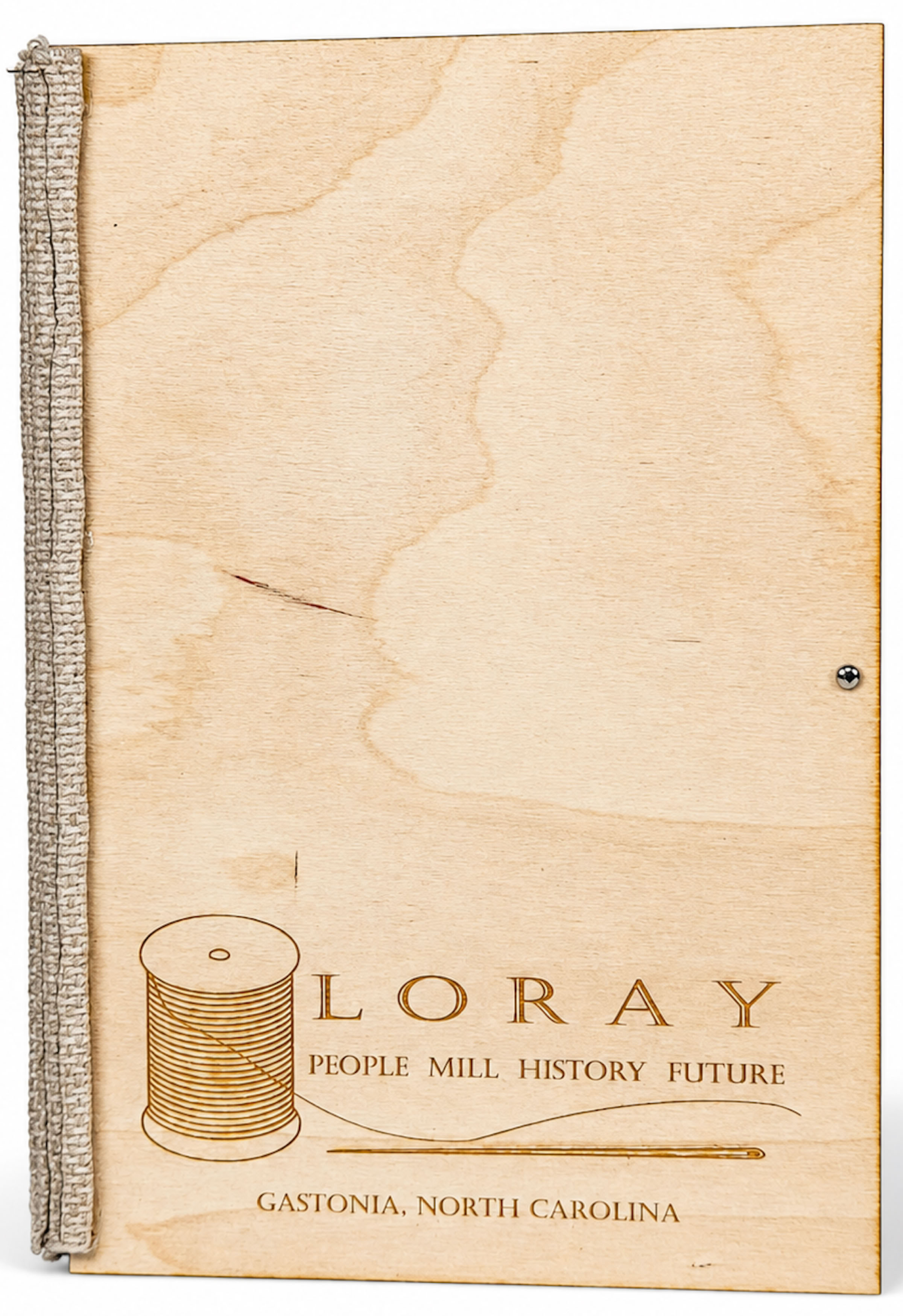
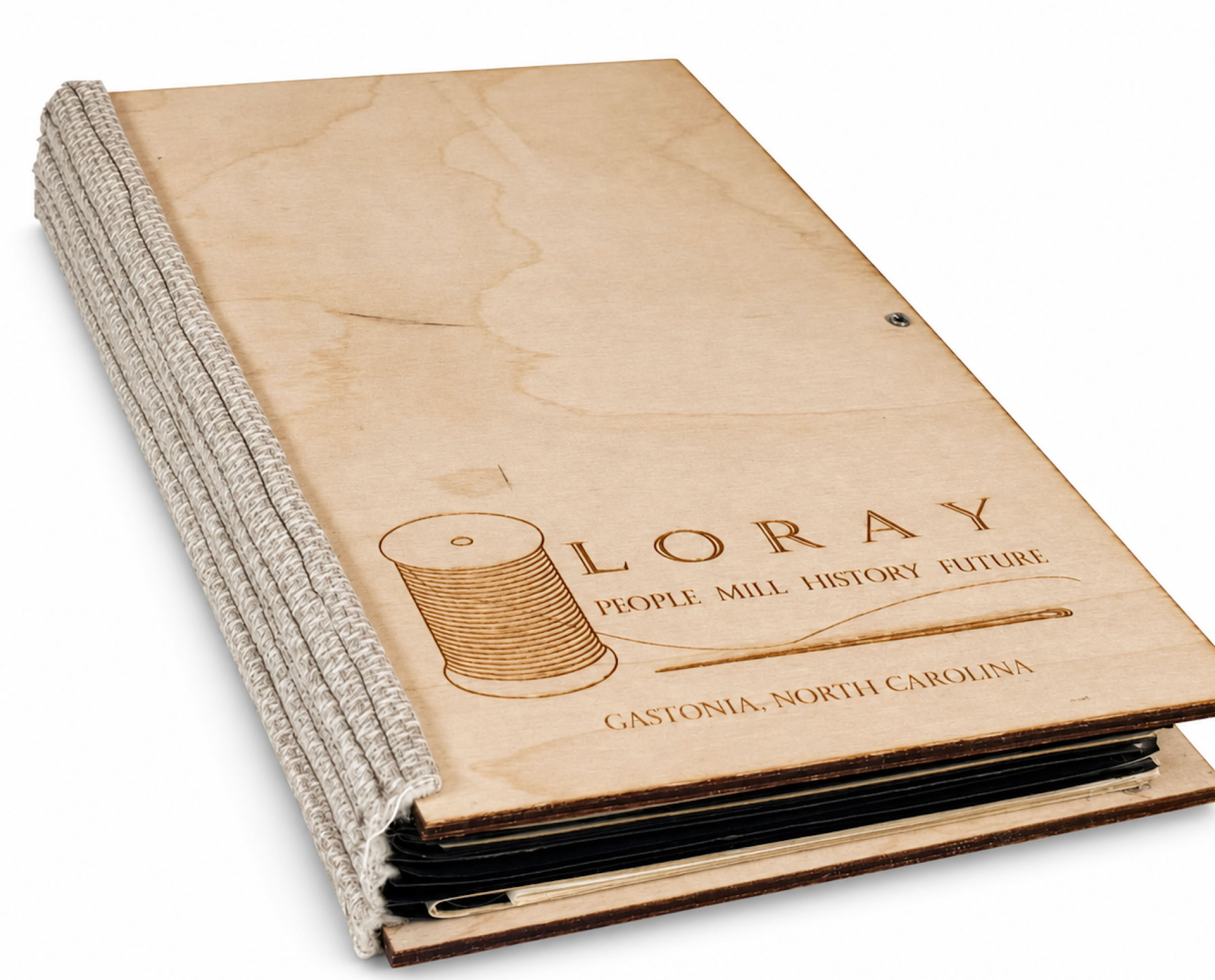
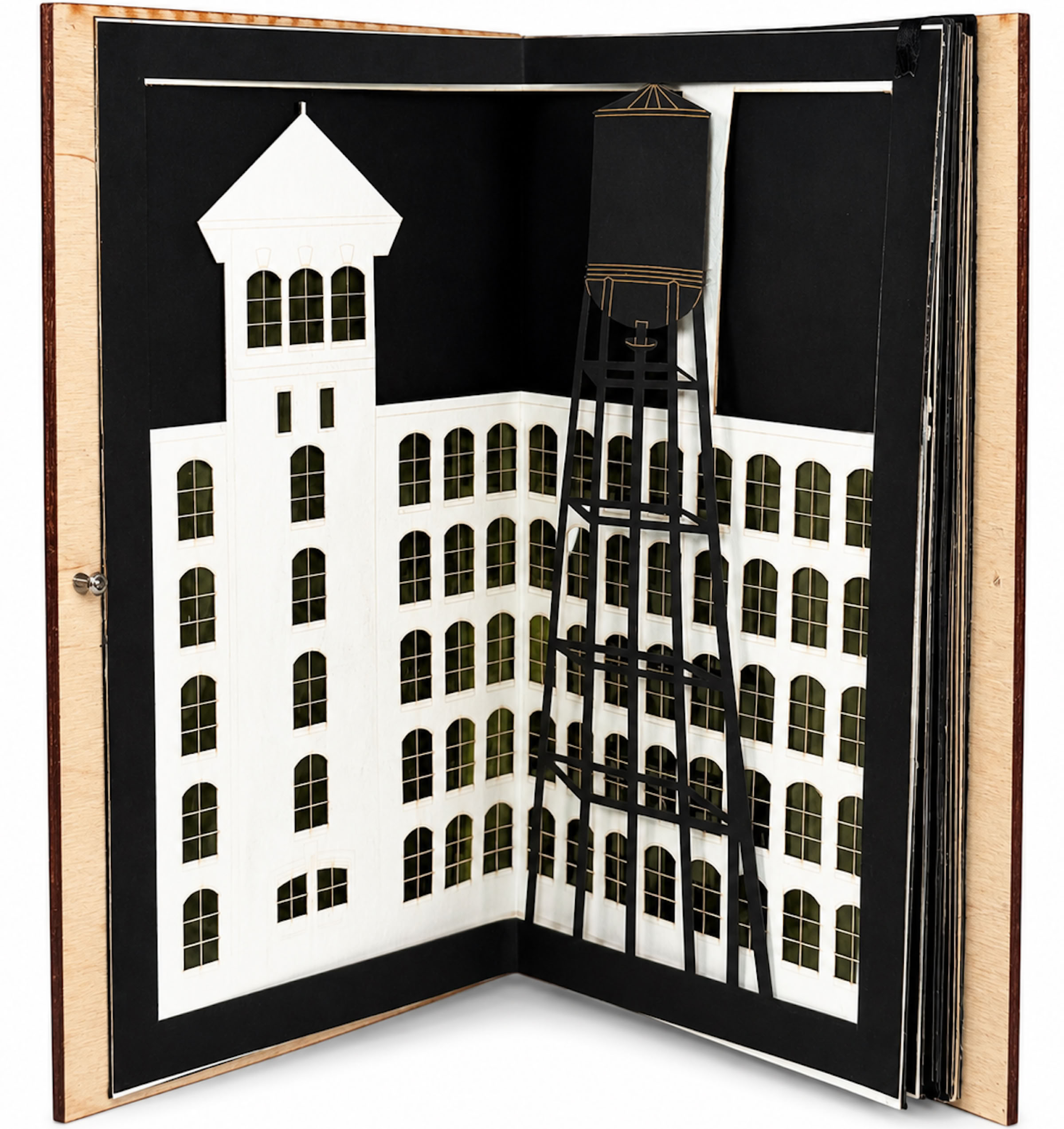
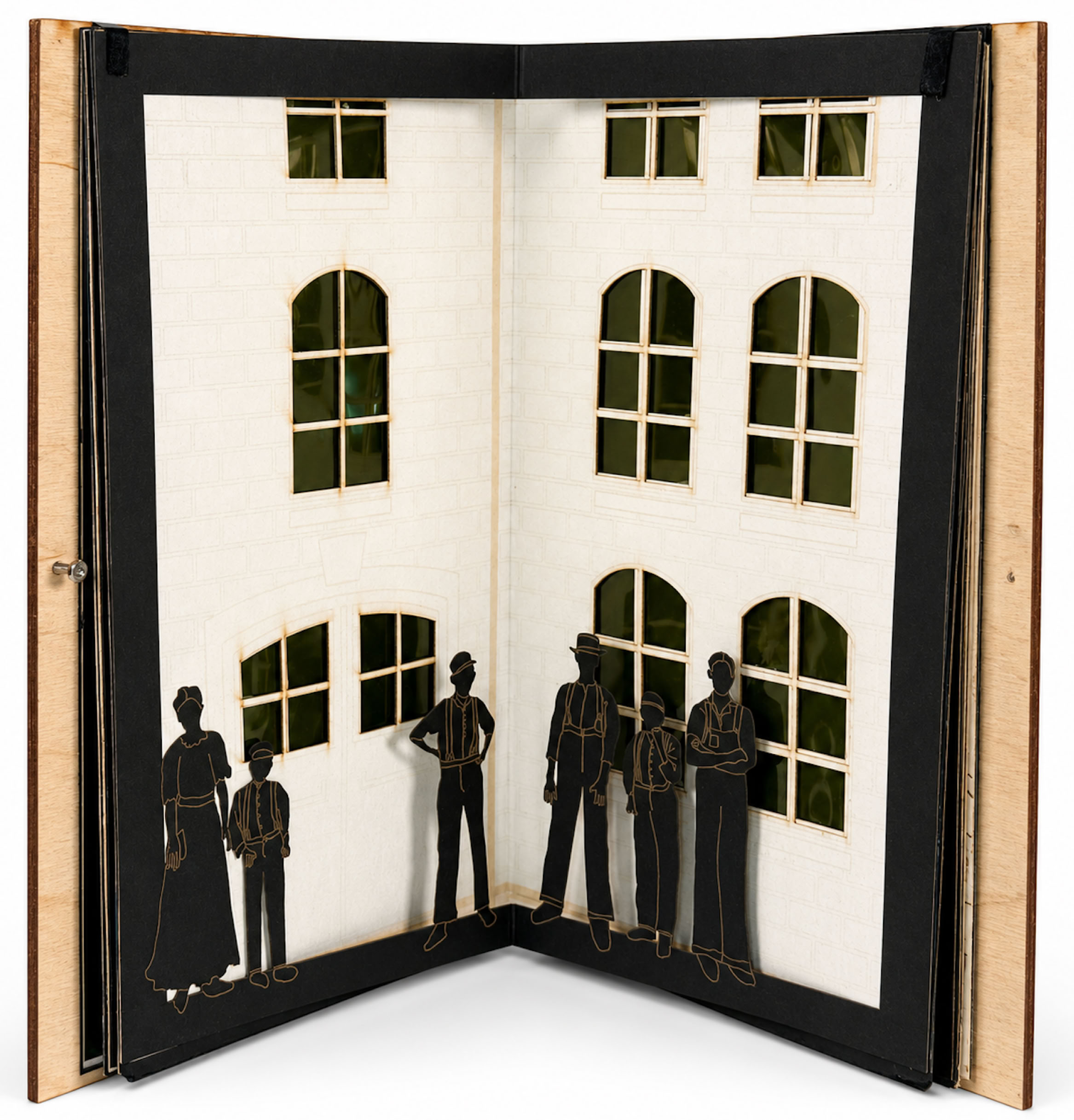
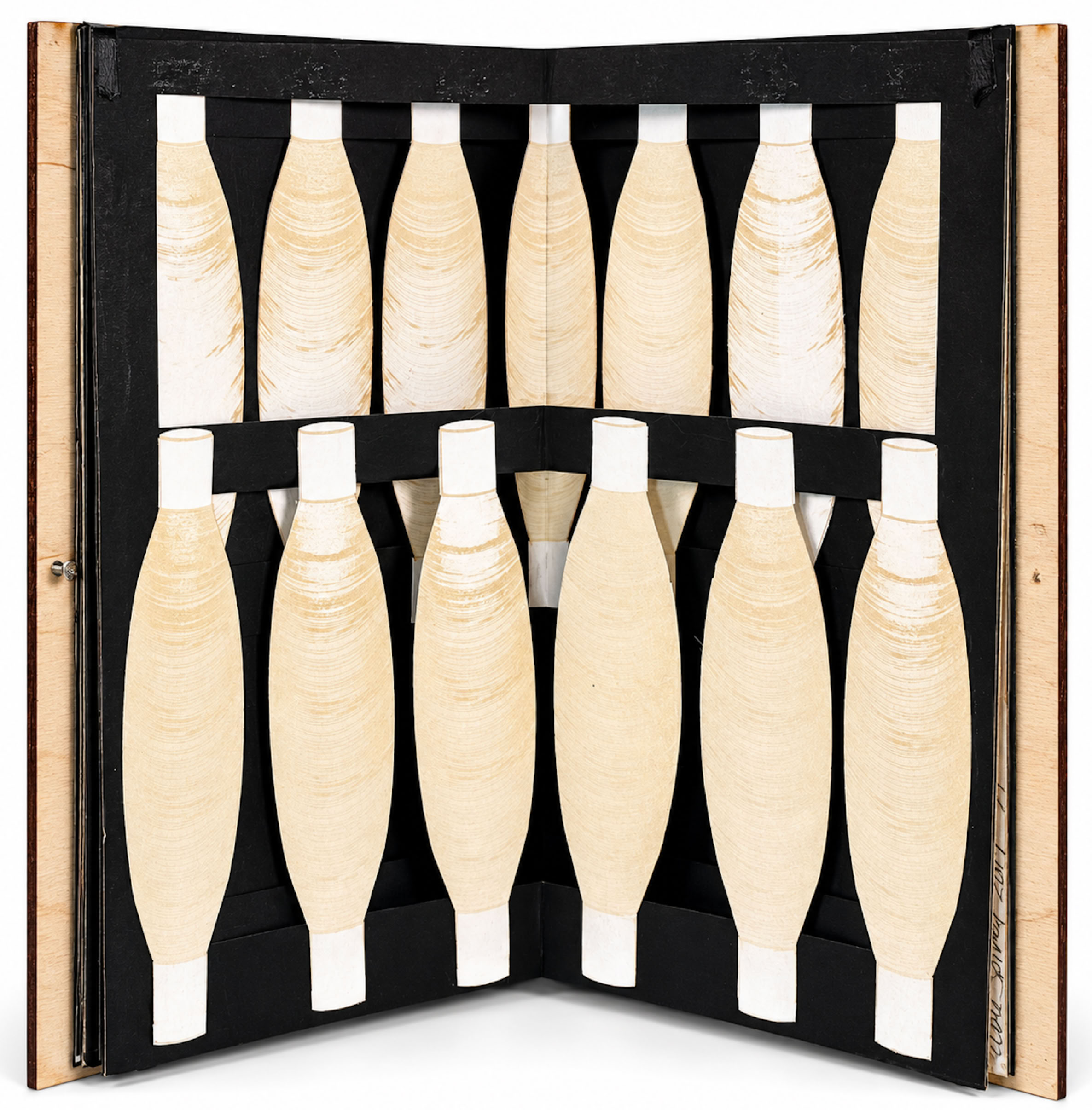
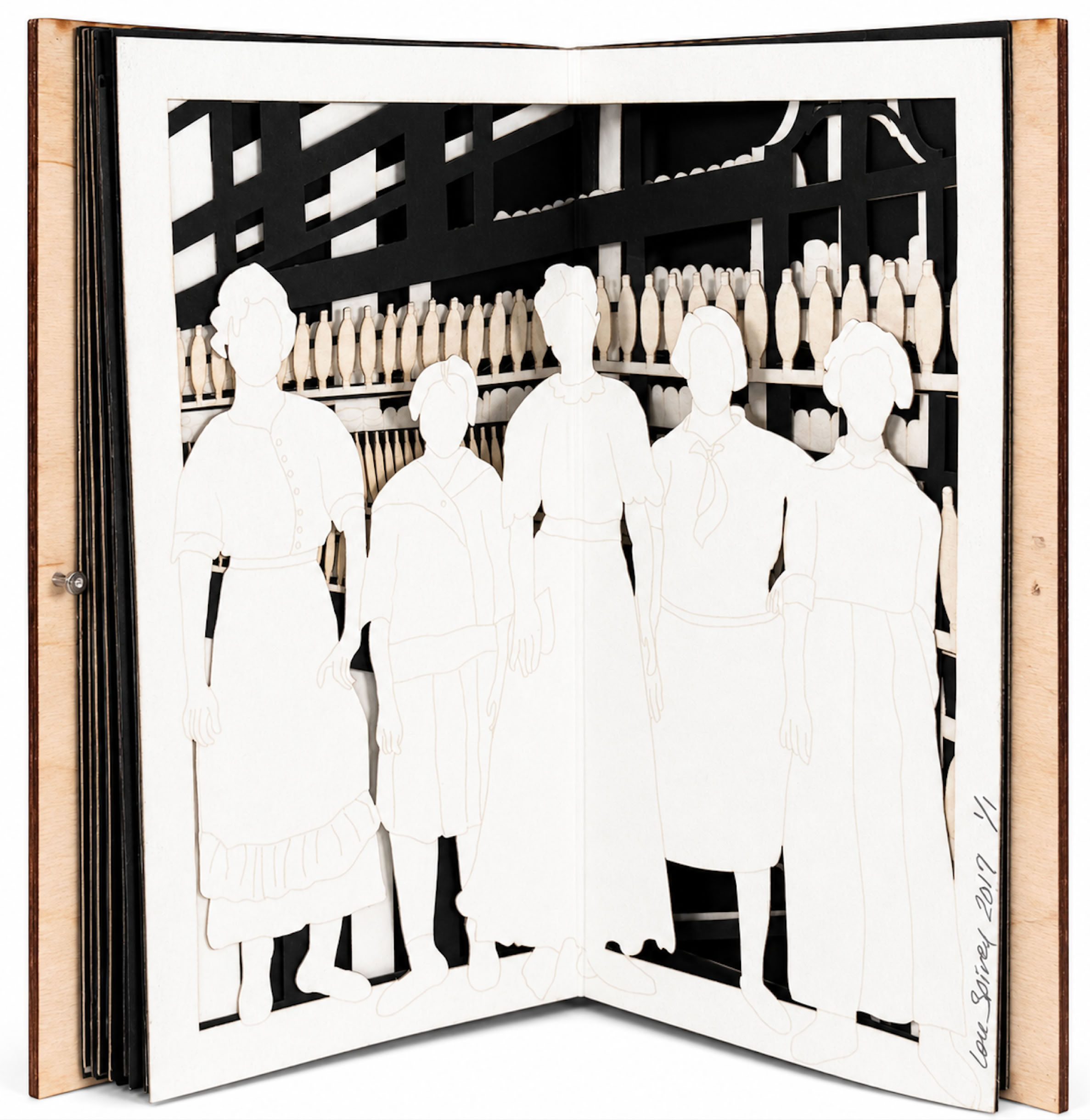
Loray: People • Mill • History • Future is a hand-crafted sculptural artist's book that explores the history, architecture, and human
stories of the Loray Mill in Gastonia, North Carolina. Bound between laser-cut birch plywood covers with an exposed sewn spine,
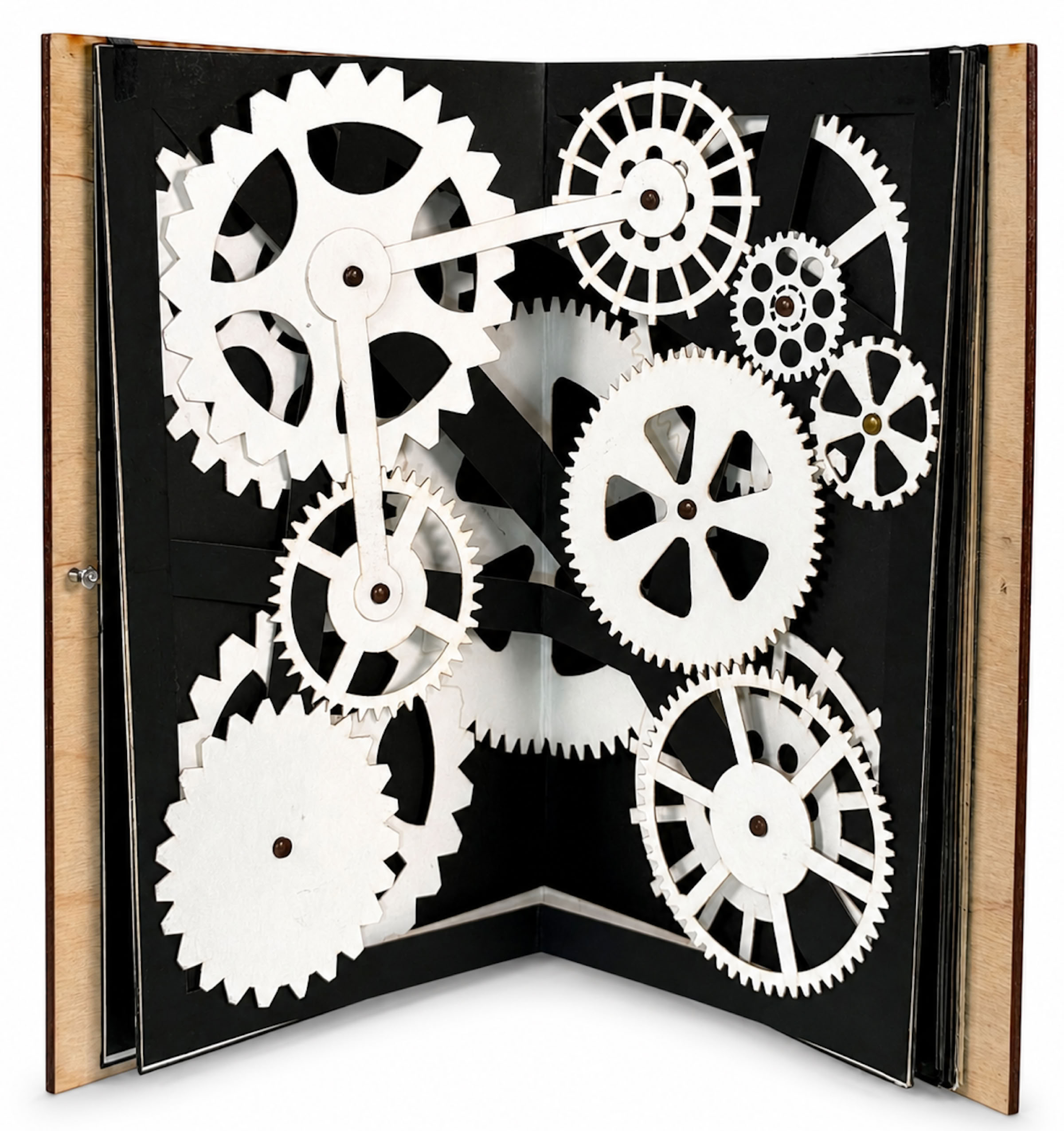
the book unfolds through a series of layered paper-engineered spreads depicting the mill's iconic architecture, towering water
tank, textile machinery, spinning bobbins, factory workers, and interlocking gears that once powered one of the largest textile
manufacturing facilities in the world.
Each dimensional scene invites the viewer deeper into the narrative, revealing the relationship between industry and community.
Architectural cutaways create a sense of place, while silhouetted figures represent the thousands of men, women, and children
whose lives revolved around the mill. Mechanical elements symbolize the relentless rhythm of production, and carefully layered
paper construction creates depth, shadow, and perspective, allowing history to unfold one page at a time.
Inspired by the events surrounding the 1929 Loray Mill Strike and the lasting impact the mill has had on Gaston County, Loray
reflects on both the prosperity and the hardships woven into the region's textile heritage. Rather than presenting a single
historical viewpoint, the book encourages viewers to consider the many voices that shaped the mill's legacy—the workers,
families, organizers, and community members whose lives remain intertwined with its story.
Both historical document and sculptural object, Loray: People • Mill • History • Future transforms paper, wood, light, and shadow
into an immersive visual narrative, preserving the memory of a place whose influence continues to shape the identity of Gastonia
today.

Artist Statement
The Loray Mill has always fascinated me. Long before I understood its history, I knew its presence. As a child growing up in
Gaston County, I would pass the massive brick building and wonder about the people whose lives had filled its windows. Even in
silence, the structure seemed to carry the weight of thousands of stories. Today it has been transformed into apartments, but it
still stands as one of the most recognizable landmarks in our community—a reminder that places can outlive the people who
give them meaning.
As I began researching Loray's past, I discovered a history far more complicated than the building itself. Once one of the largest
textile mills in the world, Loray represented both opportunity and hardship. Entire families depended on its wages, yet the mill
also became the center of one of the most significant labor conflicts in American history. Reading The Thirteenth Juror by Robert
L. Williams and Elizabeth W. Williams, along with accounts of the 1929 strike and the life of Ella May Wiggins, revealed a story
that refuses simple conclusions. It is a history filled with courage, sacrifice, injustice, and deeply human choices.
What moved me most was not simply the politics of the strike, but the individuals behind it. Men, women, and children entered
the mill each day carrying hopes for a better life while enduring exhausting labor. Ella May Wiggins, whose murder remains
unsolved, reminds us that history is often written around those whose voices were the easiest to silence. Her story, like so many
others connected to Loray, asks us to confront uncomfortable truths about justice, power, and the value of a single human life.
In creating this book, I wanted to move beyond documenting architecture. The mill itself becomes a stage upon which the lives
of workers unfold. Layers of paper echo the layers of history hidden within its walls. Cut windows invite viewers to look beyond
the façade, while dimensional scenes reveal fragments of daily life, machinery, labor, and community. The act of turning each
page becomes an act of uncovering another piece of a story that still shapes Gaston County today.
Book arts are uniquely suited to preserving memory because they ask the viewer to slow down. Every page reveals another
perspective, another voice, another possibility. Like history itself, the narrative cannot be understood from a single viewpoint. It
unfolds gradually through exploration.
Loray: People • Mill • History • Future is both a tribute and an invitation—to remember the people whose hands built the
prosperity of this region, to acknowledge the conflicts that defined it, and to recognize that the buildings we inherit are more
than architecture. They are vessels of memory, carrying the hopes, struggles, and resilience of generations whose stories
deserve to be opened, explored, and remembered.
Year: 2017
Medium: Mixed media artist's book
Structure: carousel
Materials: Archival papers, mixed media
Dimensions: closed 8.75” x 6” x .75”
open 8.75” x 17.5” x 17.5”
Edition: Unique
Status: Available