Curatorial Note
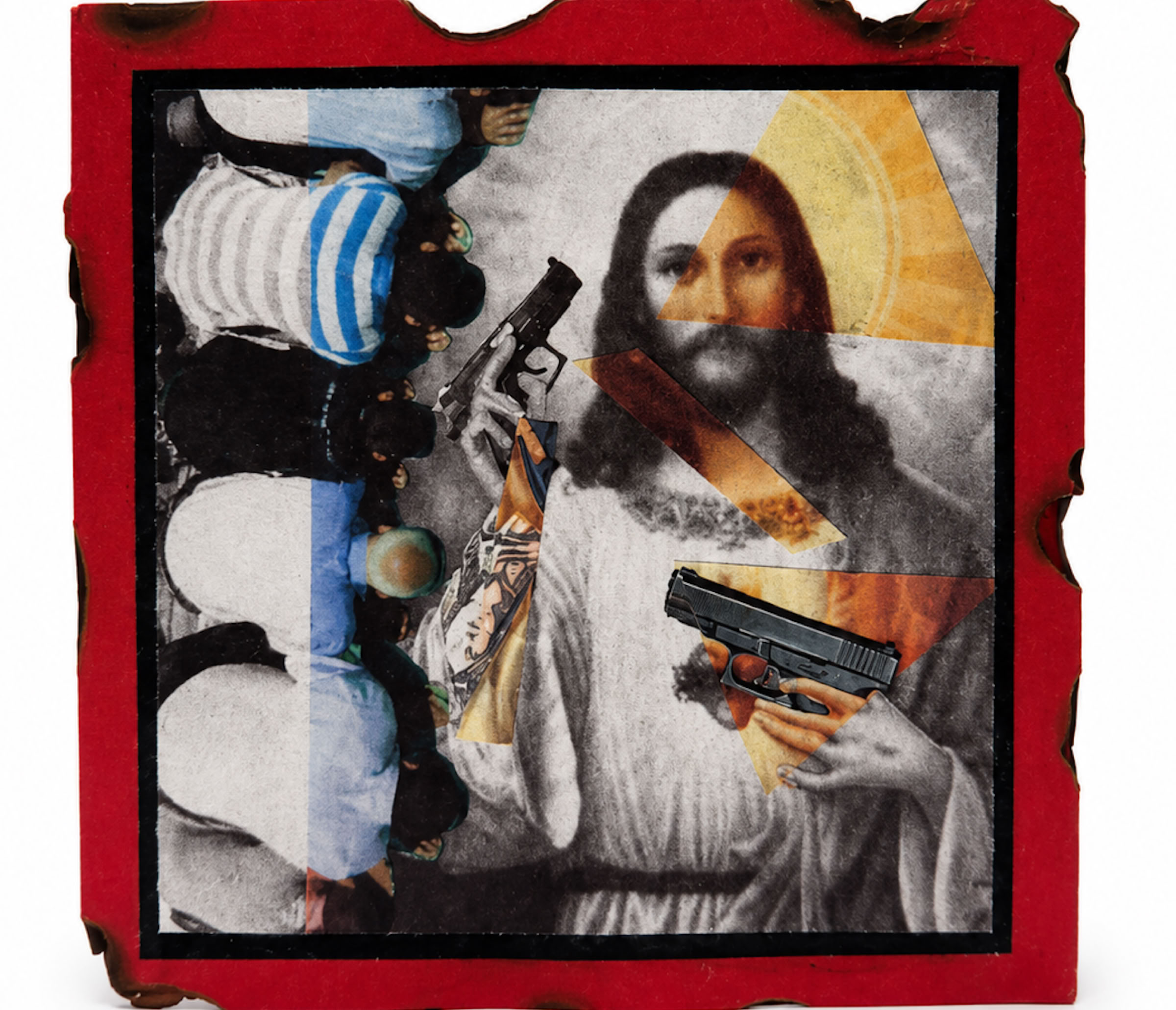
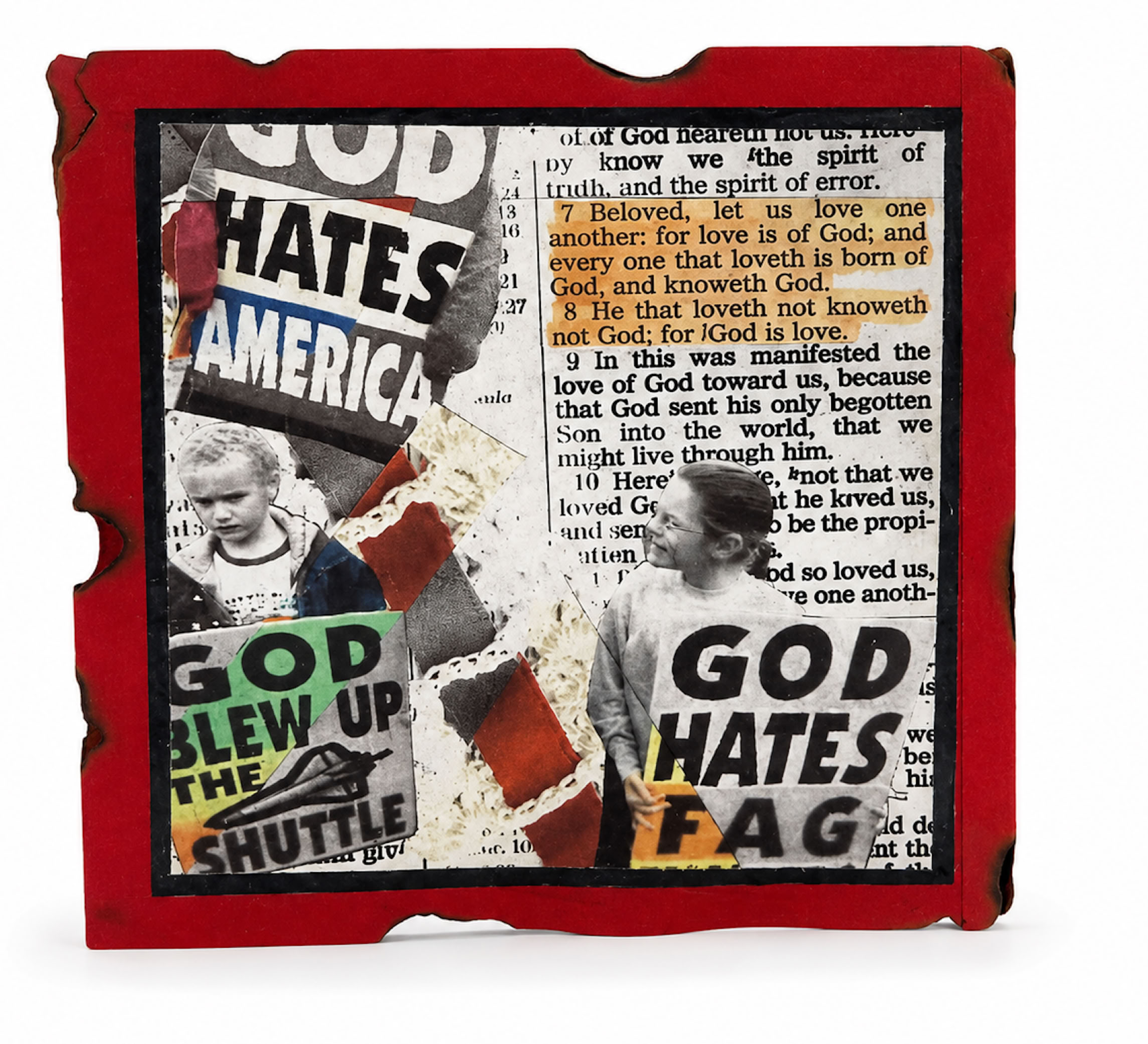
Sacred : Profane contains imagery that intentionally juxtaposes religious iconography with contemporary symbols of violence. Some viewers may find these visual relationships challenging.
The work explores symbolism, cultural memory, and the ways images acquire and transform meaning over time. It is presented as an invitation to thoughtful dialogue and personal interpretation and is not intended as an endorsement of violence or a commentary on any particular religion, belief system, or political position.
Sacred : Profane
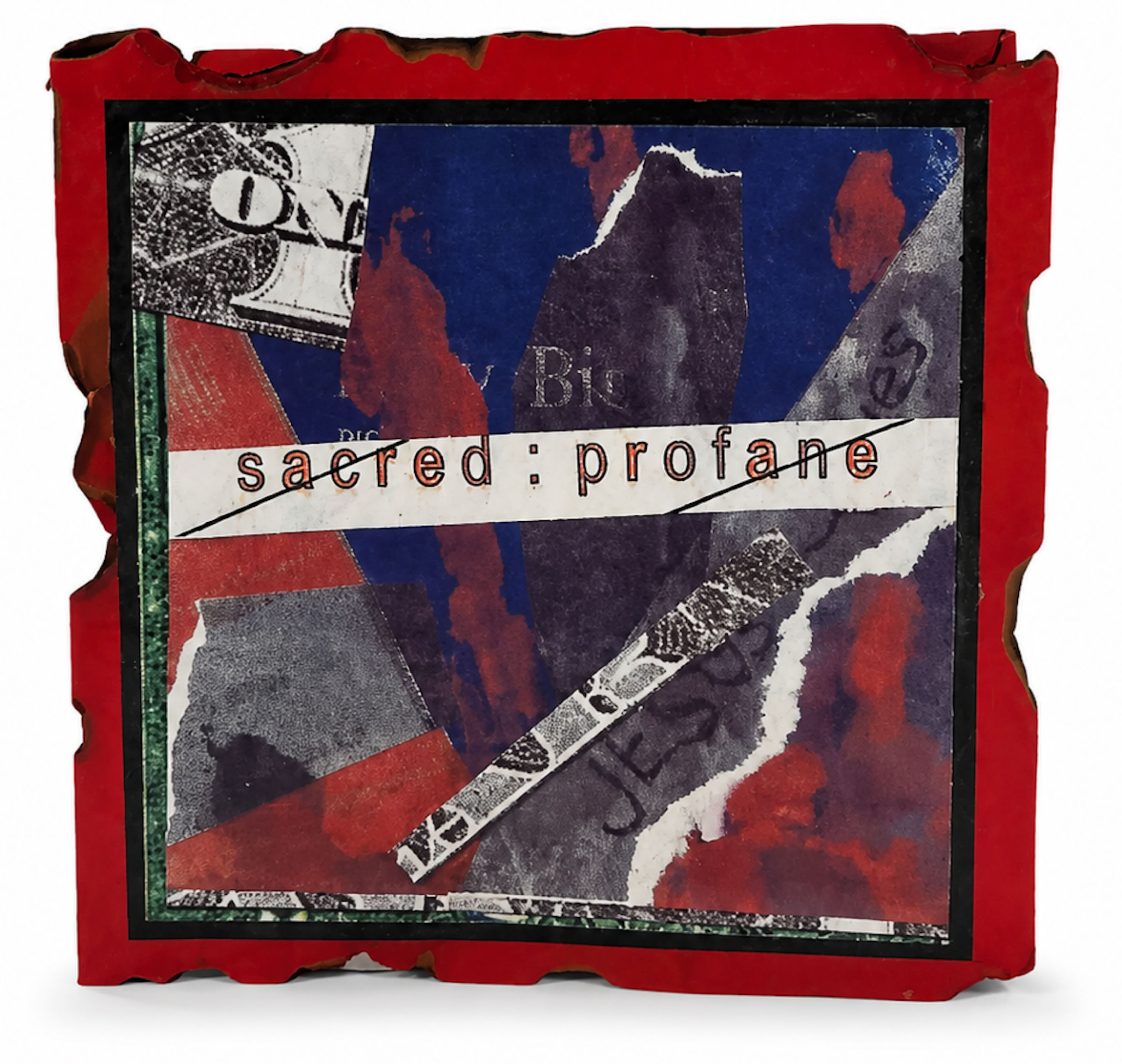
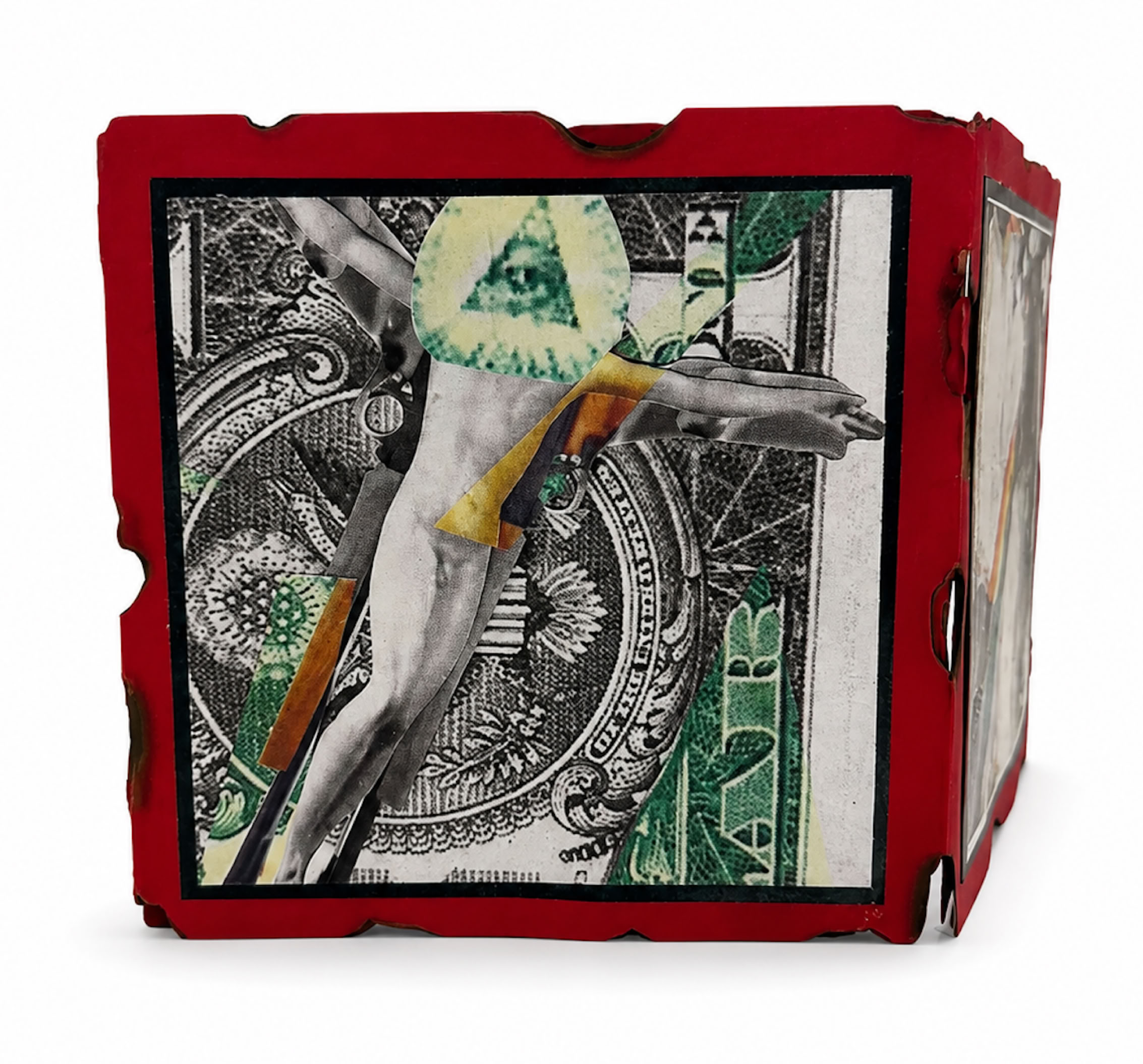
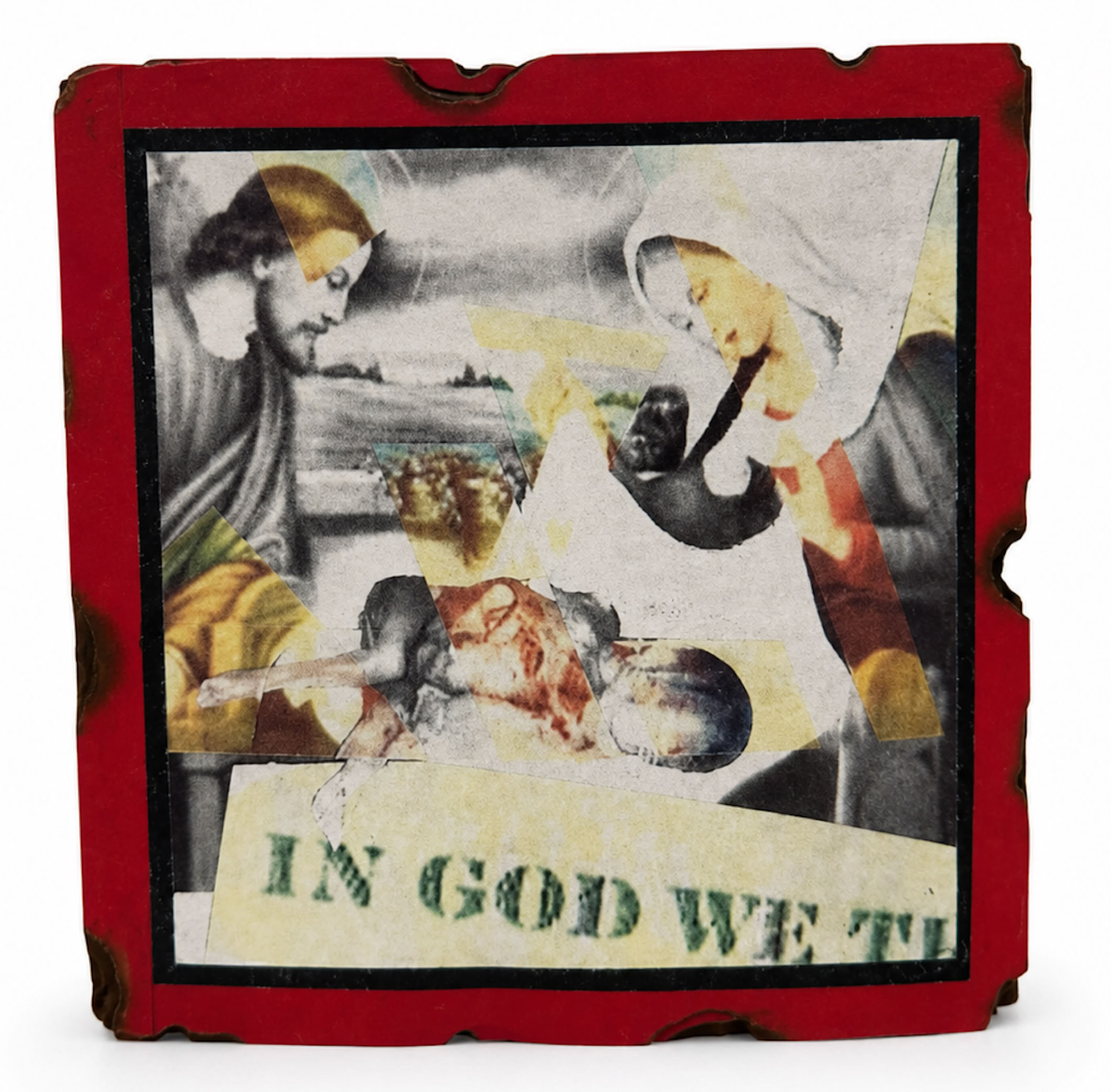
Sacred : Profane is a hand-crafted artist's book that explores the complex relationships between faith, violence, memory, and
cultural symbolism. Through layered imagery, distressed surfaces, and interactive page sequences, the work invites viewers to
consider how familiar symbols change meaning across time and circumstance. Rather than presenting a single narrative, the
book unfolds as a series of visual conversations, encouraging personal reflection and multiple interpretations.


Artist Statement
Throughout history, books have preserved humanity's beliefs, recorded its triumphs and failures, and carried the stories that
shape our understanding of the world. In Sacred : Profane, I use the artist's book as a place where opposing ideas can exist
together—faith and conflict, reverence and violence, devotion and doubt.
I have long been fascinated by the power of symbols and the ways their meanings evolve over time. Religious imagery, historical
references, and contemporary visual culture all carry histories that extend far beyond their original contexts. By placing these
symbols into unexpected relationships, I am less interested in providing answers than in creating opportunities for reflection.
The work asks viewers to consider how images influence memory, shape cultural narratives, and continue to acquire new
meanings across generations.
The book form is essential to this experience. Unlike a single image, an artist's book unfolds gradually. Each page turn reveals
new visual conversations while altering the meaning of those that came before. As viewers move through the work, they become
active participants, assembling connections and interpretations through the physical act of discovery. Meaning is not presented
all at once—it emerges over time.
The distressed surfaces, layered imagery, and tactile construction reflect the way history itself is built: imperfect, fragmented,
continually revised, yet never completely erased. Every layer leaves evidence of what came before, reminding us that cultural
memory is shaped by accumulation as much as by omission.
Rather than offering a fixed interpretation, Sacred : Profane invites sustained looking and thoughtful dialogue. I hope viewers
leave with questions rather than conclusions, recognizing that the most enduring works of art often illuminate complexity
instead of resolving it.
Year: 2023
Medium: Mixed media artist's book
Structure: concertina
Materials: Archival papers, mixed media
Dimensions: closed 6” x 6” x .2”
fully extended 6” x 48” x .1”
Edition: Unique
Status: Available
Curatorial Note
Sacred : Profane contains imagery that intentionally juxtaposes religious iconography with contemporary symbols of violence.
Some viewers may find these visual relationships challenging.
Presented in the form of a unique accordion (concertina) artist's book, the work explores the evolving meanings of cultural
symbols and the complex intersections of faith, history, memory, and human conflict. Rather than advancing a particular
religious or political viewpoint, it invites thoughtful observation, personal reflection, and open dialogue.
Visitors are encouraged to engage with the work as an exploration of symbolism and visual metaphor, allowing space for
multiple interpretations shaped by their own experiences.

